
Every year, the garment industry dumps mountains of fabric scraps into landfills—a material waste estimated at fifteen to twenty percent. Challenged by Reebok with finding a way to turn that waste stream into new products, our team at Savannah College of Art and Design leveraged systems thinking to rethink the brand’s relationship to its customers and users.
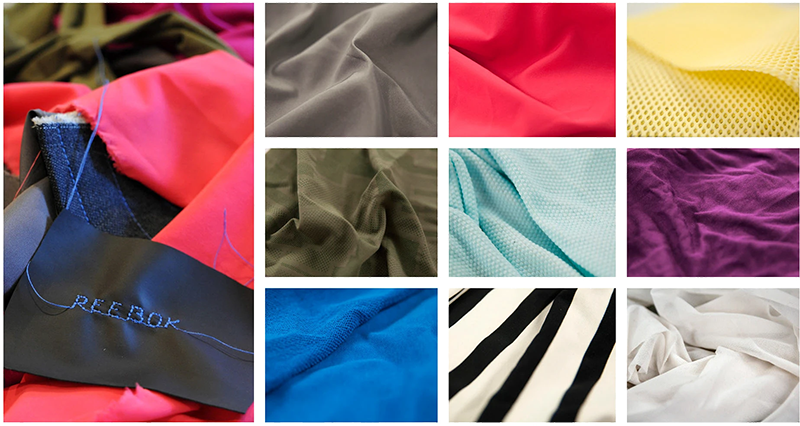
Our team set out to research, explore and present opportunities for Reebok to use material scraps, cutoffs, end-of-roll and discontinued fabrics to create product.
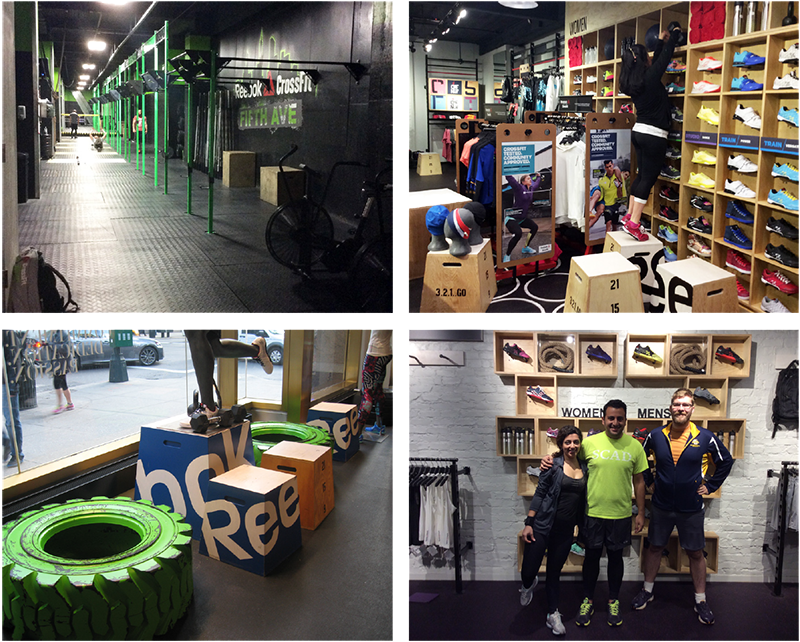
We set out to explore Reebok’s Fithubs, athletic and fashion trends, and market competitor stores. It was an immersive research experience, as we completed a Crossfit workout (nearly killing me) and explored the Fithubs scattered around Manhattan.
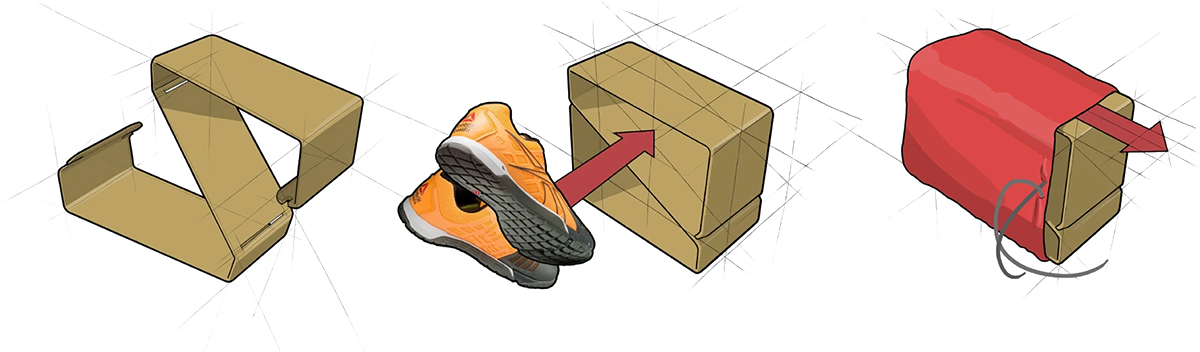
Our team explored many options for making use of the material off-cuts, but settled on a packaging concept that would leverage waste textile to create a re-usable bag that comes as part of the packaging for a new pair of shoes.
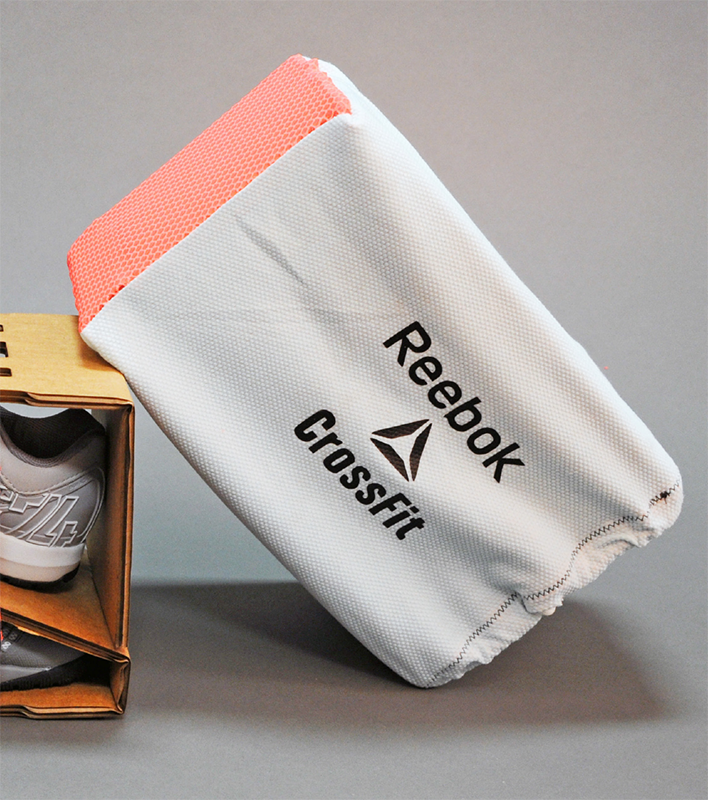
The waste textile material from off-cuts at the end of a roll of fabric gets a new life protecting new shoes as a part of Reebok’s packaging. By replacing the traditional cardboard box with a simple cardboard insert, this solution also reduces cardboard usage by 70%.
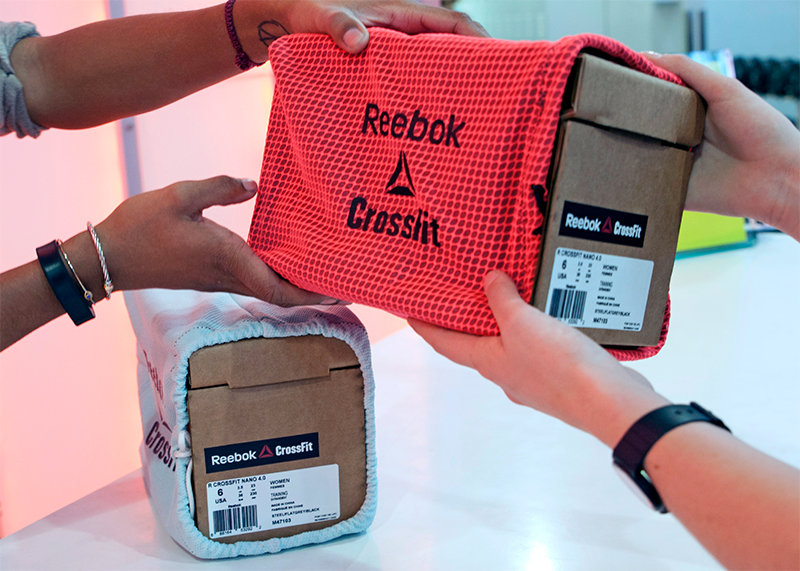
Given the inconsistent nature of the material off-cuts, each shoe’s packaging is unique and special to their wearer.
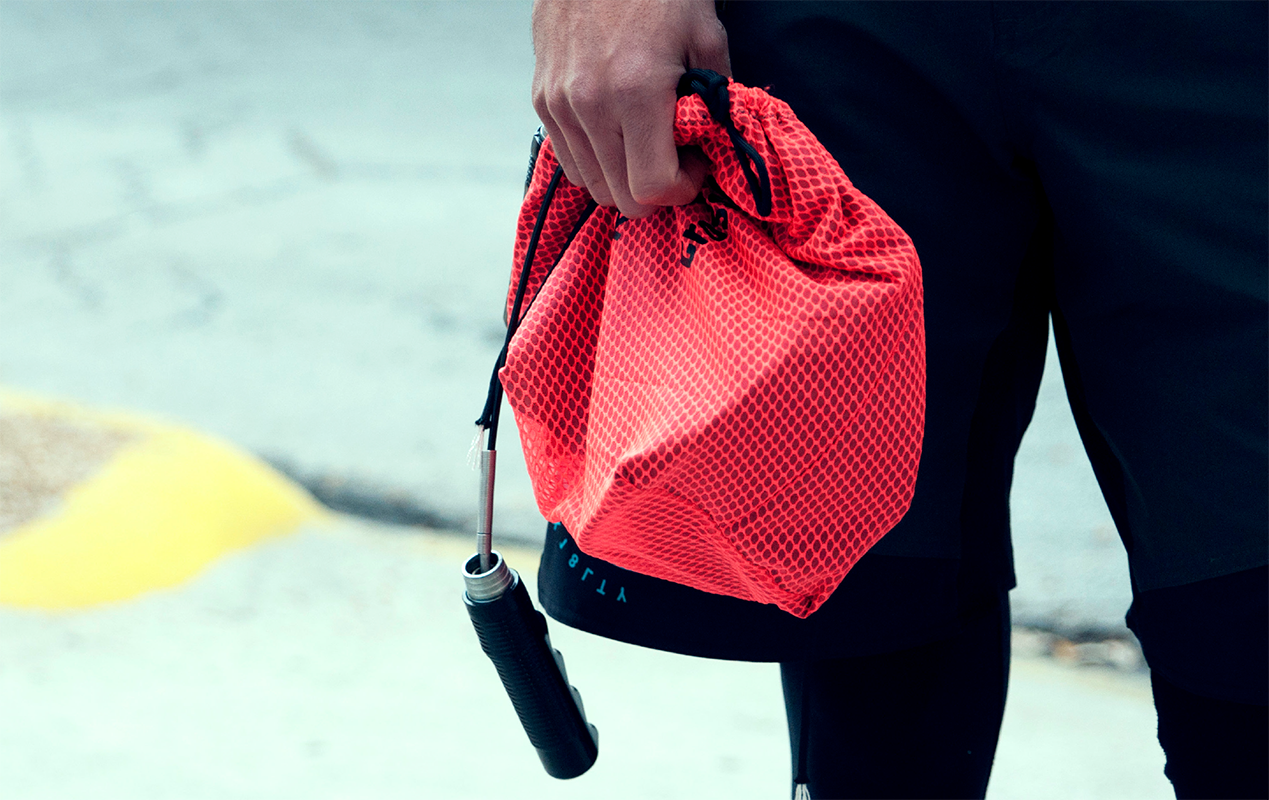
The textile maintains its useful life well after its role as packaging has ended, functioning as a reusable gym bag for the athlete.